Luís Marques (lu.ˈiʃ ˈmaɾ.kɨʃ)
email: lmarques (at) umich (dot) edu
office: Ford Robotics Building 2140
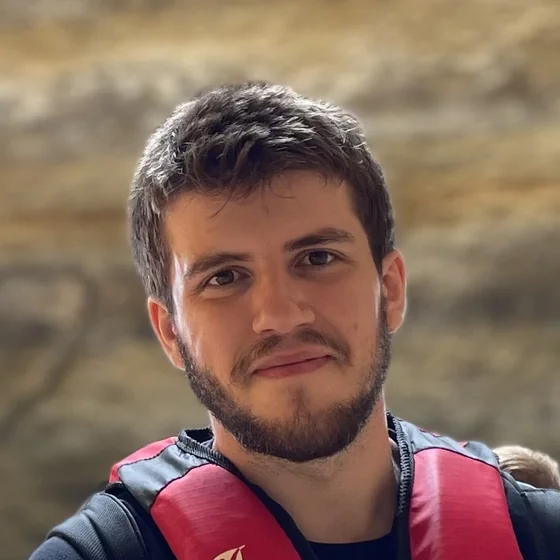
I’m a Ph.D. candidate at the University of Michigan, advised by Dmitry Berenson! I am interested in the algorithmic foundations of decision-making under uncertainty. My goal is to construct resilient, provably safe systems for low-structure environments.
Some time ago in a rainy place far, far away, I obtained an M.Eng. in Aeronautical Engineering @ Imperial College London. There, I collaborated with Panagiotis Angeloudis on safety for learned autonomous vehicles policies, and with Yiannis Demiris on modeling multi-material food manipulation interactions for assistive feeding.
Research Overview
Robots rely on imperfect models for planning and control. My work transforms predictions from arbitrary models into provably calibrated uncertainty bounds, with no distributional assumptions on the system, disturbances, or model errors. These bounds adapt to relevant context and geometry, enabling planners to steer robots towards regions of higher reliability.
Research tree, growing from a global bound on prediction error (as in worst-case robust control or split conformal prediction). Adaptation to heteroscedastic model error (WAFR ’24) grows from the global bound, becoming context-aware. Dynamics calibration from semantic images (WAFR ’26) grows from Adaptation to heteroscedastic model error, adding images. Calibrating VLM safety monitors (arXiv ’26) grows from Dynamics calibration from semantic images, adding language. Calibrating pose uncertainty on Lie groups (RA-L ’26) grows from the global bound, becoming geometry-aware. Calibrating particle predictions through contact (COPA ’26; best poster at IROS workshop) grows from Adaptation to heteroscedastic model error and from Calibrating pose uncertainty on Lie groups, adding contact and particles.
News
| Sep 2026 | ⭐ “Particle-Based Conformal Prediction for Contact-Aware Uncertainty Calibration in Stratified Configuration Spaces” received the Best Poster Award at the IROS 2026 Workshop on Hybrid Architectures for Embodied Autonomy! |
|---|---|
| Jul 2026 | “Particle-Based Conformal Prediction for Contact-Aware Uncertainty Calibration in Stratified Configuration Spaces” has been accepted to COPA! |
| Jun 2026 | Presenting “Lies We Can Trust” as an Oral Spotlight @ Geometry in the Age of Data-Driven Robotics Workshop, ICRA |
| Apr 2026 | “Local Conformal Calibration of Dynamics Uncertainty from Semantic Images” has been accepted to WAFR 2026! |
| Jan 2026 | “Lies We Can Trust: Quantifying Action Uncertainty with Inaccurate Stochastic Dynamics through Conformalized Nonholonomic Lie groups” has been accepted to RA-L! |
Selected Publications
* denotes equal contribution; † denotes mentee.
-
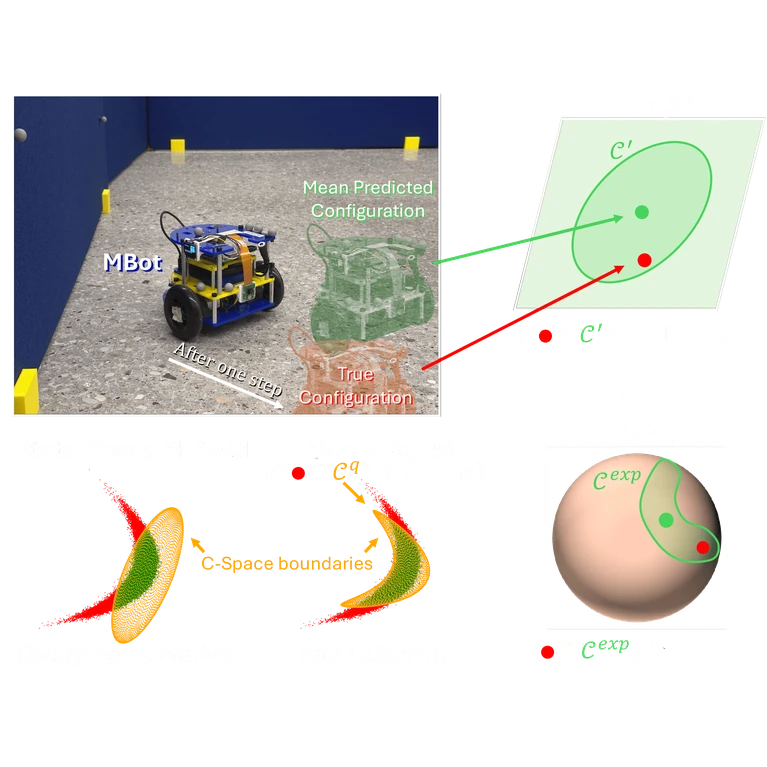
 In 15th Symposium on Conformal and Probabilistic Prediction with Applications (COPA), 2026.Best Poster Award at the IROS 2026 Workshop on Hybrid Architectures for Embodied AutonomyKey Takeaway: Constructed contact-aware, trans-dimensional prediction regions in C-space, using approximate particle-based dynamics predictors and a calibration dataset of system transitions, providing probabilistic guarantees for future configurations despite model mismatch and random disturbances.
 -
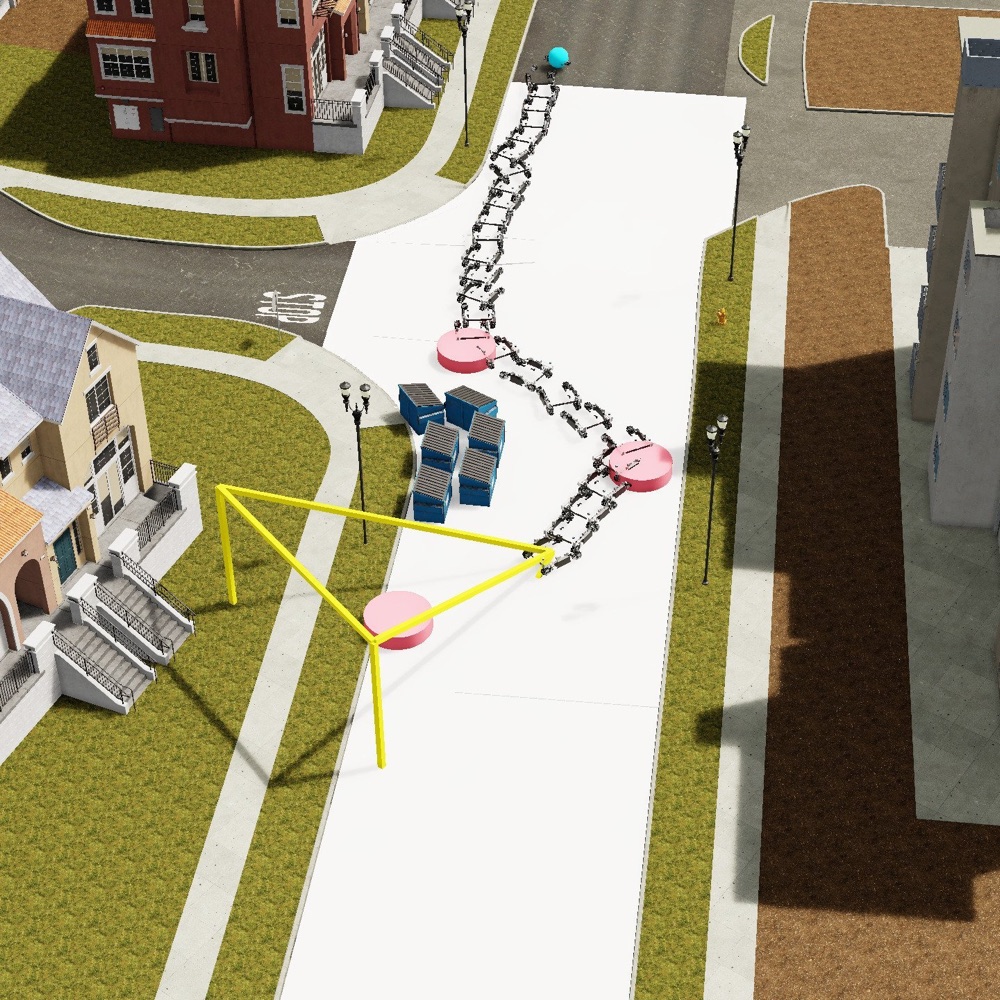 In 17th World Symposium on the Algorithmic Foundations of Robotics (WAFR), 2026.Key Takeaway: We locally calibrate dynamics model uncertainty by conditioning on latent observation embeddings, states, and actions, enabling probabilistically safe motion plans in unseen test environments.
 -
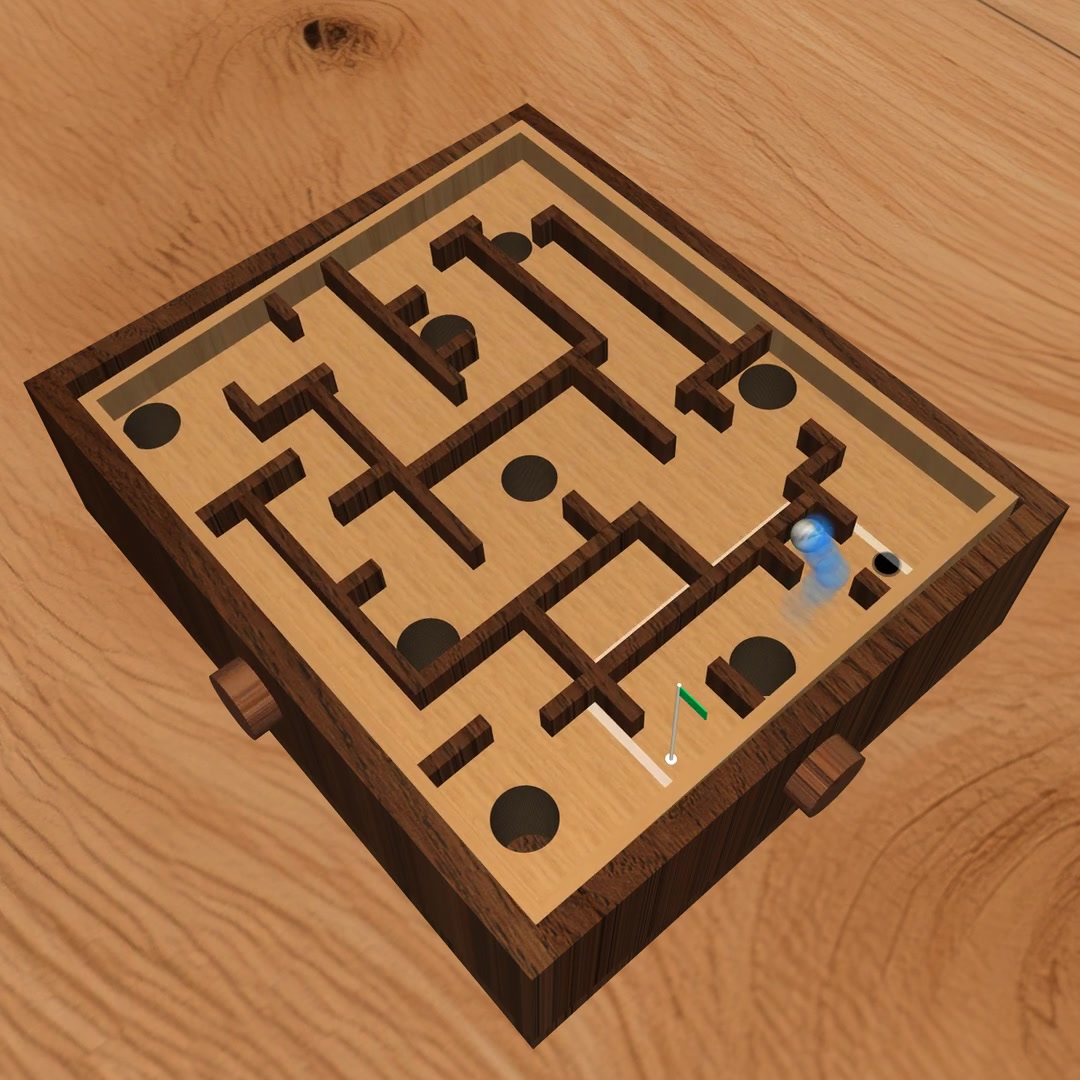
 In IEEE Robotics and Automation Letters (RA-L), 2026.Key Takeaway: Calibrated the uncertainty estimates of Lie-algebraic Gaussian estimators, extending conformal dynamics calibration from point robots in Euclidean space to systems with configurations in SE(2).
 -
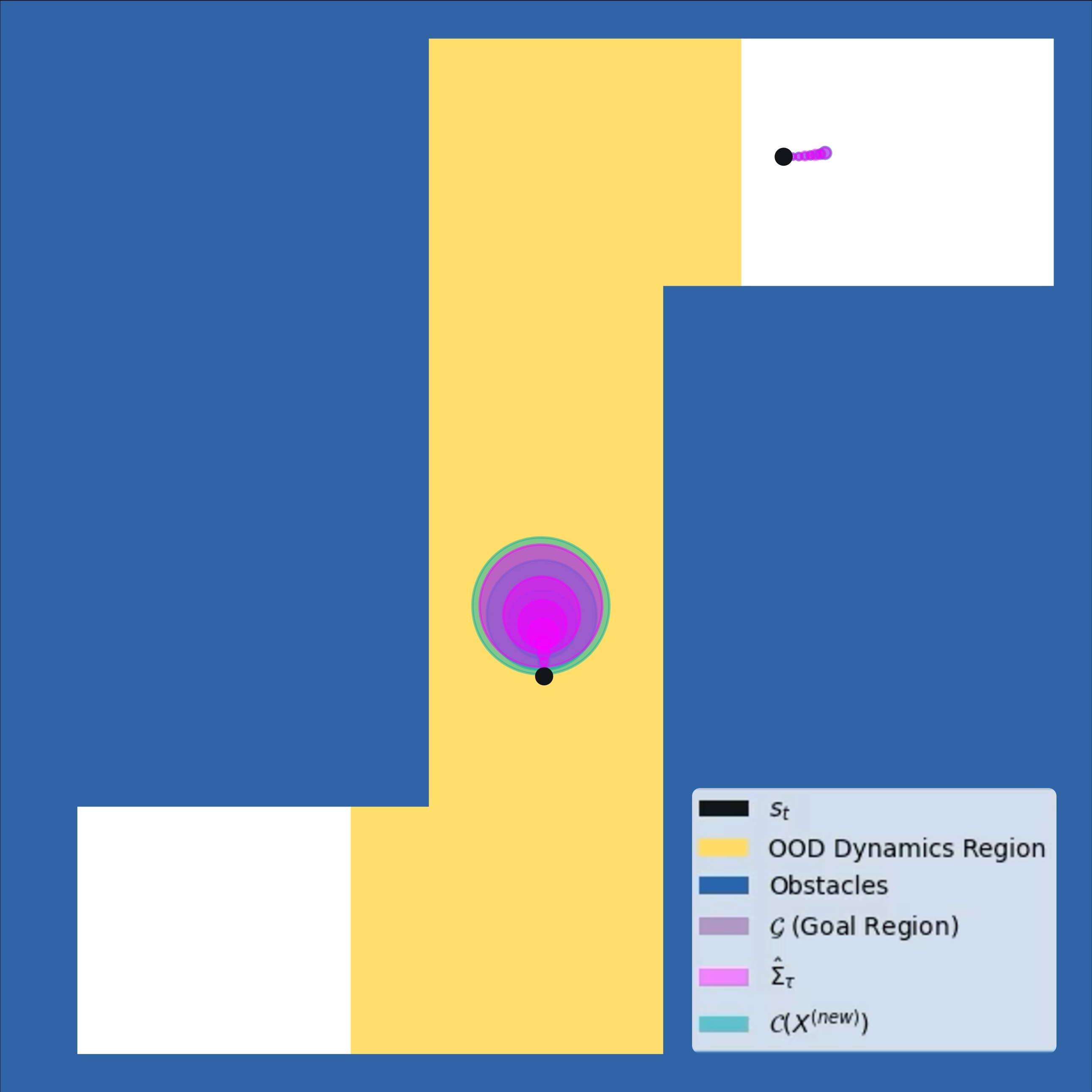 In 16th International Workshop on the Algorithmic Foundations of Robotics (WAFR), 2024.Key Takeaway: Calibrated dynamics uncertainty in the robot’s state-action space, improving plan efficiency, safety, and enabling plan steering towards regions of lower predicted uncertainty.